

Big Tech vs. the Kids
The Kids Online Safety Act, and why protecting children online is harder than it should be.

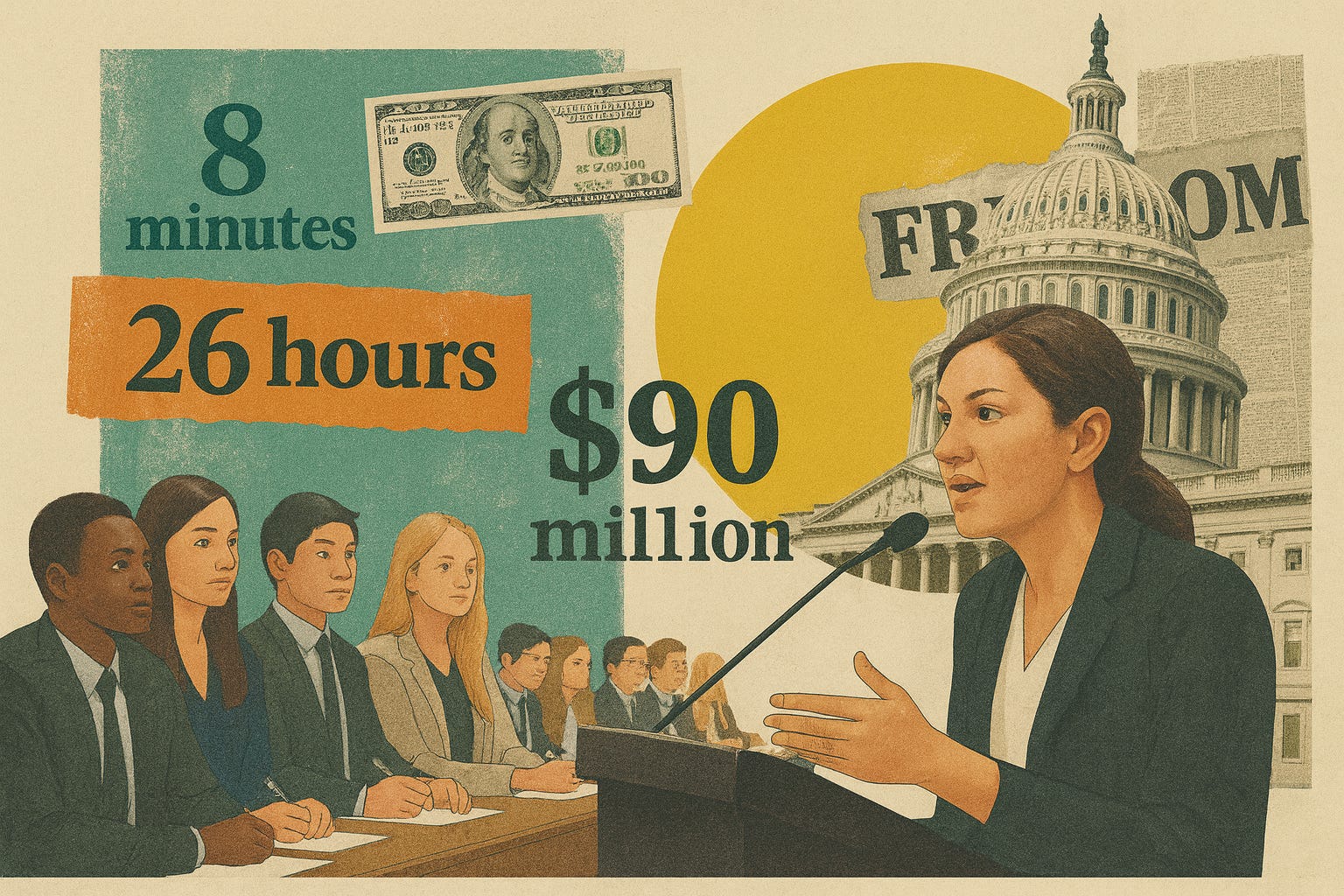
Yesterday, I sat in a briefing room in Washington, D.C. with my wonderful colleague, CEO of Bright Therapeutics, Jenna Tregarthen. She traveled 26 hours from Australia (that’s 4 hours on a bus, 17 hour flight to Dallas, then 4 more hours to DC, and an hour to the Capitol) to speak for eight minutes about the importance of protecting children online. The bill under discussion was the Kids Online Safety Act, or KOSA. It passed the Senate last year by a historic vote of 93–3, but it was tabled, and now it rests with the House of Representatives.
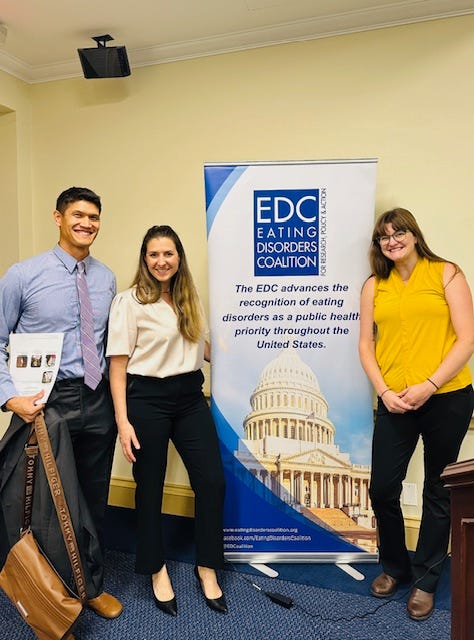
The room itself was unremarkable. It honestly reminded me of a lot of some of the inservices I sat in when I was a social worker for the State of Washington. Small, neutral walls, filled mostly with congressional aides who are (to my eyes, very) young staffers shuttling between simultaneous hearings and briefings, tasked with taking notes and reporting back to their bosses. That’s how Washington runs- there were 6 simultaneous briefings, and elected officials cannot be everywhere at once, so 20-something year old aides become the eyes and ears of Congress.
Jenna, alongside a few other experts, stood before them with one hour to explain why platforms should not be allowed to design features that exploit children’s vulnerabilities or to actively serve harmful content to them. She traveled 26 hours to try to convince them that children deserve protections online.
26 hours.
8 minutes.
And then I thought about a number Jenna had told me: $90 million. That how much Facebook and other tech companies had spent lobbying against this bill as of a year ago. (They also employ 1 lobbyist for every 8 lawmakers in Washington- lobbyists who don’t have to fly across the world to be in the room.)
The contrast felt almost surreal. A clinician leader- and a mother- traveling across the world to plead for 8 minutes for protections in front of two dozen staffers. vs a corporation with virtually unlimited resources pouring millions into lobbyists to make sure they don’t have to consider kids’ well being at all when building social media products.
This is shareholder primacy at work. In 1970, Milton Friedman argued that the one and only responsibility of corporate executives was to increase profits for shareholders. The idea took root (thanks in part to the astounding financial success Jack Walsh found by acting as if nothing mattered but money) and for the last half century it has served as the organizing principle of American business. Companies that place people or communities ahead of shareholders are treated as failing their duty, and can even be sued by shareholders.
Seen through that lens, Meta’s actions are just the logical outcome of a system that insists corporate leaders maximize profit even when human well-being is at stake. Spending $200 million to block KOSA is, in that framework, not shameful but responsible.
The argument offered to the public isn’t “we must protect shareholder value.” It is “we must protect free speech.” But KOSA doesn’t regulate speech. It just regulates design choices, like the endless feeds engineered to be addictive or the recommendation algorithms that push harmful content to vulnerable kids.
Of course, citing “freedom” makes sure the debate is transformed into something else entirely. Facebook isn’t worried about money, no, they’re worried about FREE SPEECH. They’re defending you! It’s now a battle over ideology rather than a straightforward question of whether children deserve protection.
This sleight of hand works because Americans have been told for decades that regulation is a threat to liberty. “The market, if left alone, will correct itself.” But this is a story written by those who benefit most from the absence of rules, and who have the money to make sure everyone hears their version of things. When corporations can spend hundreds of millions to shape the political landscape, the market does not regulate itself, it just reinforces their power. (And, I can’t help but note that there is no challenge to the legal precedent that investors can sue executives for not choosing money over all else… apparently that doesn’t count as “regulation".)
Looking around that room in DC, I kept thinking about how compressed power is in Washington. There was so much influence distilled into a couple of buildings where most of the listening ears belong not to elected officials but to young aides with overfull schedules. Against that backdrop, Jenna’s eight minutes felt both profound and fragile.
And, of course, it made me think about my own work, and how I use my platform, and how I make money. I understand the drive to make money in meaningful ways, which is why so many of us end up in mental health. I want to wake up each day and do work that matters, and I want to be compensated fairly. These two desires are part of what has driven the deluge of “innovators” moving from tech to mental health tech in the past 5 years.
But I also feel the pull toward something else: to not be beholden to the companies that pay me, but to write and speak more directly about these forces—the ways business, politics, mental health, and even faith are braided together.
That is why I am choosing to write here more often. Because unless we learn to see clearly the systems shaping our lives, we will keep mistaking ideology for morality.
And the people who can afford $90 million in lobbying to convince you your life shouldn’t be controlled by big government will successfully hide the fact that it’s not freedom they’re selling, it’s just a different entity (theirs) in control.